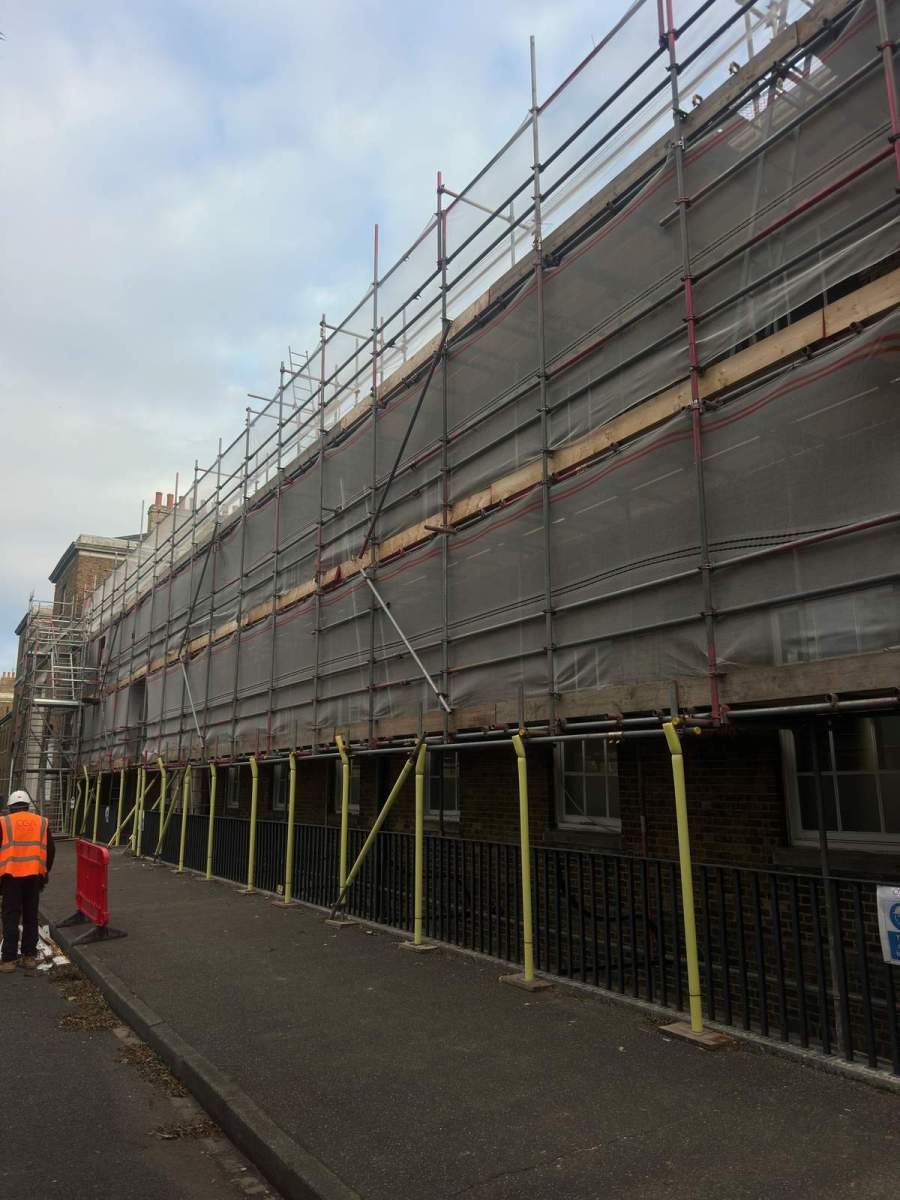
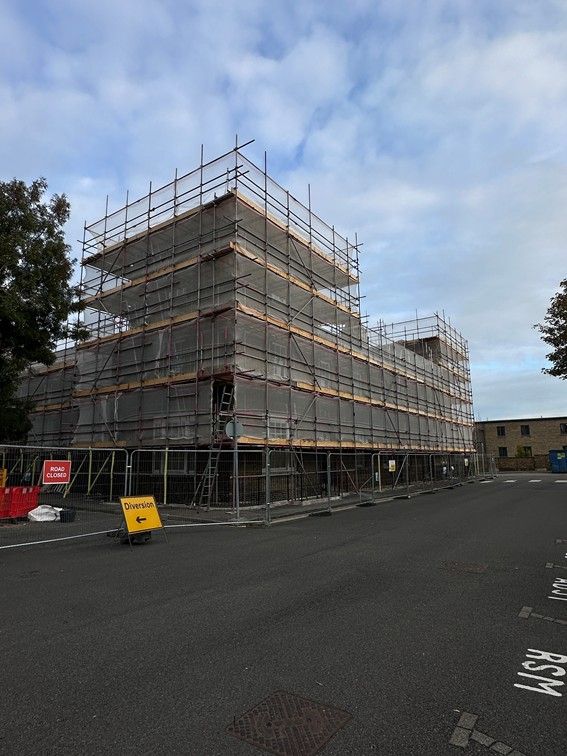
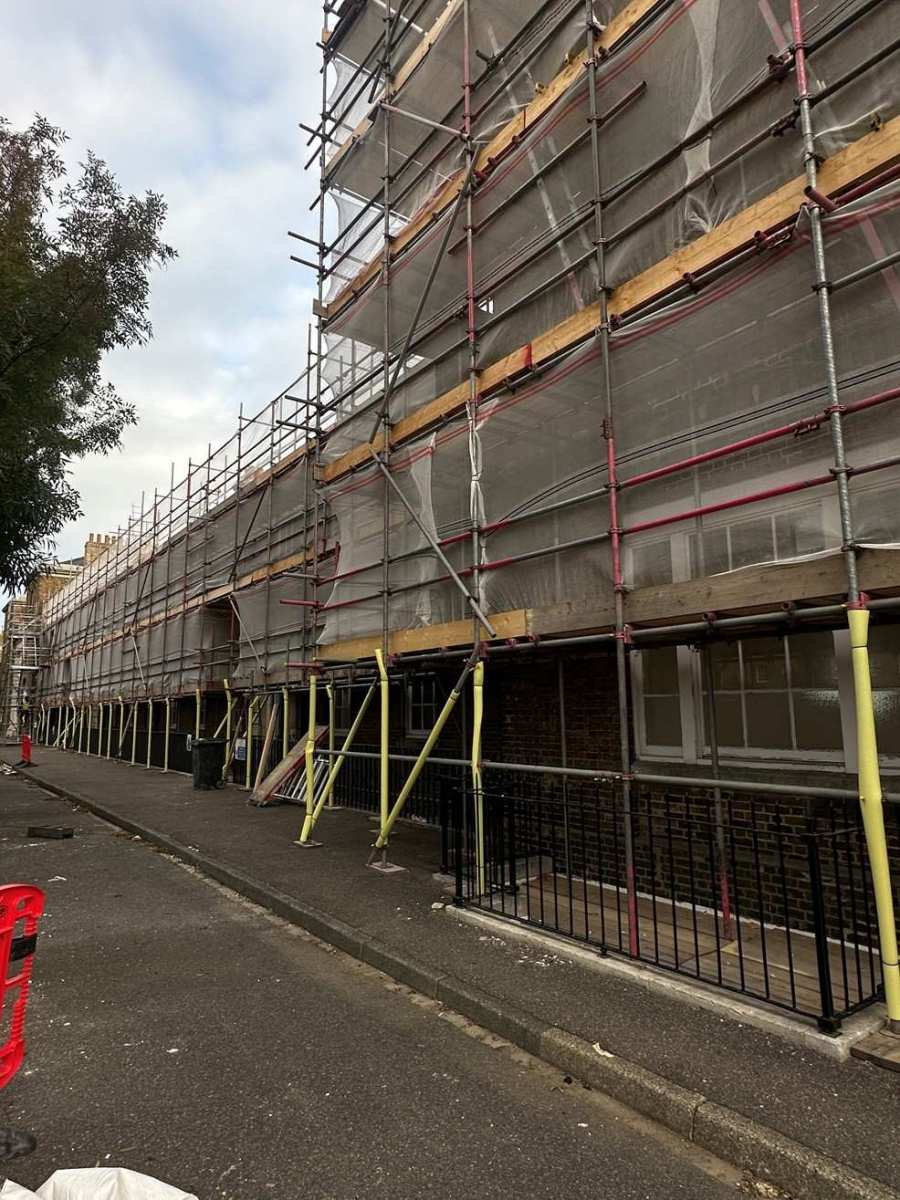
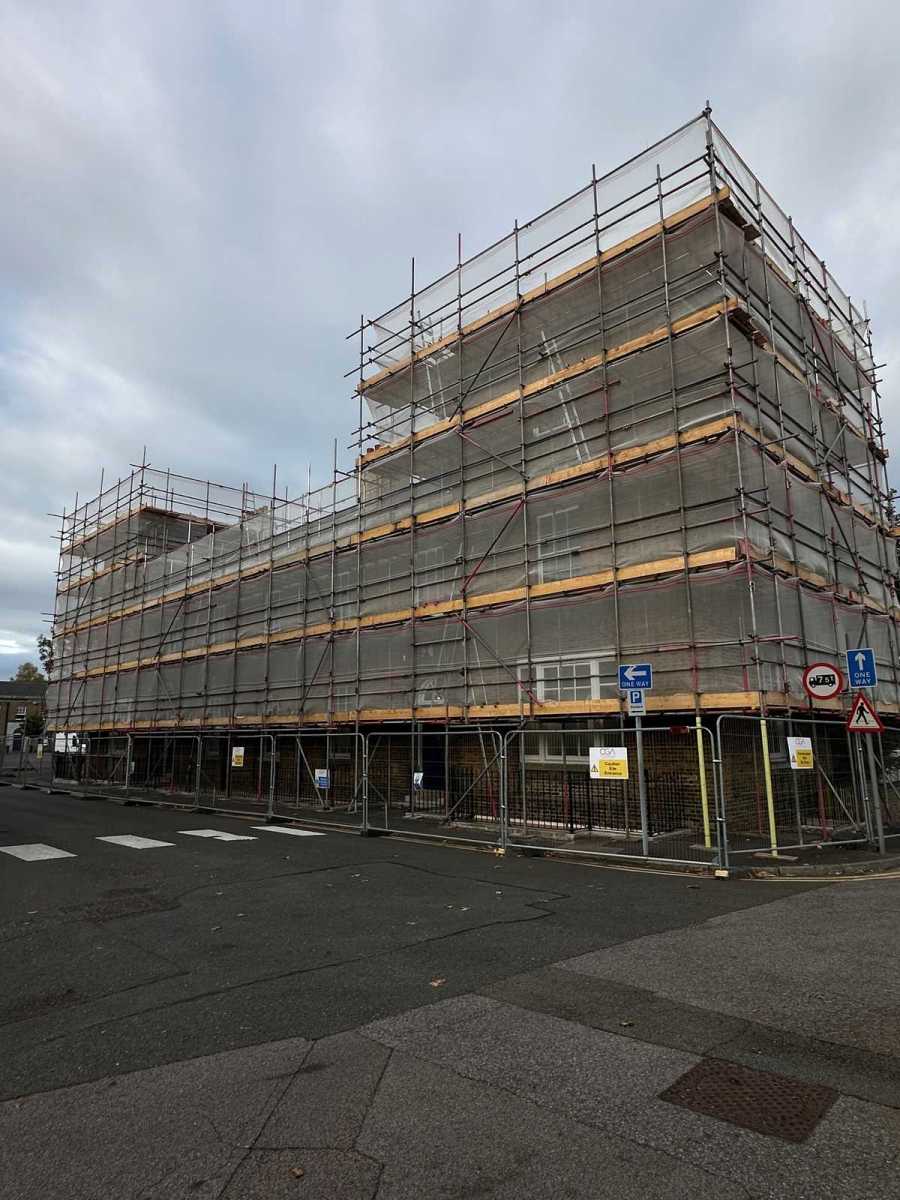
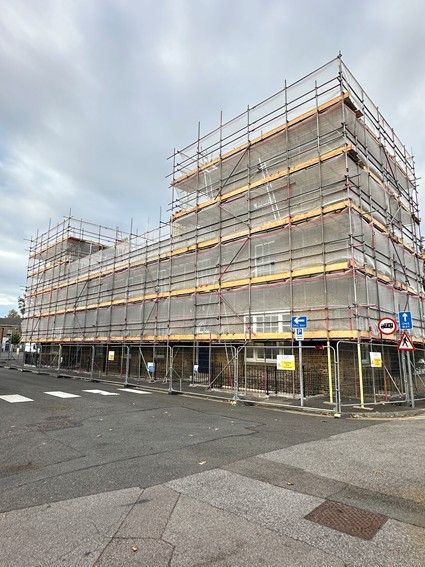
Location: North Block, Brompton Barracks, Pasley Road, Chatham, Kent, ME4 4UG
Client: Clive Graham Associates (CGA)
Project duration: 35 weeks
Sector: Military / Heritage / Listed Buildings
Listed status: Grade II*
Services: Heritage access scaffolding, roofing access, concrete repair access, exterior cladding refurbishment and building remedial works
AMA Scaffolding was appointed by Clive Graham Associates (CGA), a contractor specialising in historic building restoration, to provide access scaffolding for an extensive programme of refurbishment and remedial works at North Block, Brompton Barracks, in Chatham, Kent.
North Block is a Grade II* listed building within the historic Brompton Barracks complex, home to the Royal Engineers. The building dates from the early 19th century and forms part of one of Britain’s most significant surviving military architectural sites.
The project involved providing scaffolding access to support roofing works, concrete spalling repairs, exterior wall cladding and the correction of various building defects and non-compliant construction elements.
As the property is a protected historic building, the scaffolding needed to accommodate the requirements of the refurbishment while taking account of the building’s architectural importance.
Our scaffolding remained on hire for 35 weeks, supporting the specialist contractors carrying out the remedial and restoration works.
Heritage Scaffolding for a Grade II* Listed Military Building
North Block is situated within Brompton Barracks on Pasley Road in Chatham, a historic military complex associated with the Royal Engineers and the Royal School of Military Engineering.
Constructed between 1804 and 1806, North Block was designed by architect James Wyatt and Lieutenant-Colonel R D’Arcy of the Royal Engineers. The building features historic brickwork, limestone ashlar detailing and slate roofing, with a symmetrical architectural arrangement typical of the period.
Its Grade II* listing recognises its particular architectural and historic importance.
Unlike modern commercial buildings, historic structures often require additional consideration when scaffolding is installed around their external elevations.
Features such as ageing masonry, architectural detailing, historic roof coverings and existing structural conditions can affect how access arrangements are developed.
For this project, AMA Scaffolding provided an access solution to support the refurbishment programme being undertaken by CGA.
Our experience providing scaffolding for heritage and listed buildings was particularly relevant to a project involving a protected military property.
The scaffolding needed to provide practical access to the areas requiring attention while allowing the specialist restoration contractors to undertake their work over an extended period.
Working with Heritage Restoration Specialists
The client for the project was Clive Graham Associates, specialists in historic restoration and refurbishment works.
Projects involving listed buildings demand an understanding of the relationship between modern construction requirements and the preservation of historically significant structures.
The refurbishment programme at North Block involved several different types of remedial work, from addressing deterioration in existing building materials to correcting construction defects and building elements that did not meet the required standards.
These activities required suitable access to external elevations and roof areas.
Our responsibility was to provide the scaffolding infrastructure needed by the contractors undertaking the work.
The 35-week hire period reflected the extended access requirements associated with the refurbishment programme.
Scaffolding Access for Roofing Works
Roofing repairs and refurbishment formed part of the works being undertaken at North Block.
The roof is an important element of any historic building, protecting the structure and its interior from water penetration and deterioration.
North Block’s original architectural design incorporates slate roofing, making the roofline an important part of its historic character.
Working on older roofs can present challenges because of the height of the building, the condition of existing materials and the need to access different sections without unnecessarily disturbing surrounding features.
Access scaffolding provides working platforms from which roofing contractors can carry out inspections, repairs and remedial activities.
For the Brompton Barracks project, our scaffolding supported the roofing works being undertaken by CGA and the wider project team.
The access arrangements formed part of the temporary infrastructure required for the restoration and building improvement programme.
Access for Concrete Spalling Repairs
Another important part of the refurbishment involved repairing areas affected by concrete spalling.
Concrete spalling occurs when sections of concrete crack, deteriorate or break away from the surrounding material.
One common cause is corrosion of embedded steel reinforcement. As the steel corrodes, it can expand and place pressure on the surrounding concrete, causing cracking and sections of the surface to detach.
Other contributing factors can include moisture penetration, freeze-thaw cycles, poor-quality original construction and long-term exposure to environmental conditions.
On buildings undergoing extensive refurbishment, concrete spalling may need to be addressed to prevent further deterioration and reduce the risk of loose material becoming a hazard.
Repair work can involve:
- Condition Assessment: Identifying damaged concrete and establishing the extent of deterioration.
- Removal of Defective Material: Carefully removing loose or damaged concrete where necessary.
- Reinforcement Treatment: Inspecting and treating exposed reinforcement where required.
- Concrete Repairs: Reinstating affected areas using suitable repair materials and methods.
- Surface Finishing: Completing repairs in accordance with the relevant structural and architectural requirements.
At North Block, AMA Scaffolding provided access to support the contractors carrying out the concrete spalling remediation.
For a Grade II* listed building, repair methods and materials also need to be considered in relation to the protected structure and any applicable conservation requirements.
Exterior Wall Cladding and Building Remedial Works
The refurbishment also included works associated with the building’s exterior wall cladding.
External building elements are continually exposed to rain, wind, temperature changes and general environmental deterioration.
Over time, defects can develop that require investigation, repair or replacement.
Cladding and external wall refurbishment may involve inspecting existing materials, addressing defective installations, repairing damaged components and improving weather resistance.
These activities can require access across substantial sections of a building’s elevations.
For the North Block project, the scaffolding supported the external refurbishment works, allowing contractors to reach the areas requiring attention.
The work formed part of the wider programme of building repairs and improvements being undertaken by CGA.
Correcting Construction Defects and Building Non-Compliances
An additional element of the project involved addressing major and minor construction defects and building elements that did not meet the applicable contract standards.
Construction defects can arise from problems with workmanship, materials, installation methods or the performance of existing building components.
They may be identified during inspections, condition surveys or refurbishment programmes.
At North Block, the wider scope included remedial work intended to address these shortcomings and bring the relevant elements into line with the required project standards.
Depending on their location and nature, defects affecting external walls, roof areas and other elevated sections of a building may require scaffolding access.
The work supported by our scaffolding included:
- Roofing repairs and associated remedial works.
- Concrete spalling repairs.
- External wall cladding refurbishment.
- Rectification of construction defects.
- Major and minor building remedial works.
- Works addressing elements that failed to meet contractual construction standards.
The provision of suitable access helped the specialist contractors undertake these activities as part of the coordinated refurbishment programme.
Protecting the Historic Character of North Block
One of the most important considerations when working on a Grade II* listed building is the need to respect its historic fabric and architectural significance.
North Block is more than 200 years old and forms part of the original military barracks complex.
Its historic masonry, architectural detailing and traditional construction materials require a different approach from those used on many modern buildings.
Scaffolding on listed properties must be carefully considered because the position of scaffold ties, supporting elements and working platforms can affect historic features.
Appropriate planning may involve:
- Assessing the condition and suitability of existing building surfaces.
- Considering the position of scaffold ties and other connections.
- Avoiding unnecessary contact with delicate architectural features.
- Providing access to restoration areas without obstructing essential work.
- Accounting for existing building defects and areas of deterioration.
- Coordinating scaffolding requirements with heritage specialists and the principal contractor.
- Considering any permissions or listed building consent requirements relevant to the proposed work.
These are important considerations for heritage scaffolding projects, where the temporary access arrangement must support the repair programme without compromising the historic character of the property.
At Brompton Barracks, the Grade II* listed status made the building’s heritage significance an important consideration throughout the refurbishment.
A 35-Week Scaffolding Hire Period
The scaffolding was required for a 35-week hire period, providing long-term access for the refurbishment and remedial works.
Unlike short-duration maintenance projects, extensive building restoration programmes can involve several different stages of work.
Roofing contractors, external refurbishment specialists and other trades may require access to different parts of the building as the programme progresses.
The length of the hire period therefore forms an important part of the overall scaffolding requirements.
For North Block, our scaffolding provided access over an extended programme encompassing roofing, exterior wall works and the correction of existing building defects.
Long-term installations must remain suitable for their intended purpose throughout the hire period, with inspection and maintenance requirements considered in accordance with applicable regulations.
The 35-week programme demonstrates the scale of the access requirements associated with the project.
The Result
AMA Scaffolding provided specialist access scaffolding for a 35-week refurbishment programme at North Block, Brompton Barracks, in Chatham.
Working for Clive Graham Associates, our involvement supported remedial and restoration works to a Grade II* listed building within one of the country’s most historically significant military complexes.
The project incorporated:
- Access scaffolding for a Grade II* listed heritage building.
- A 35-week scaffold hire period.
- Roofing repair and refurbishment access.
- Access for concrete spalling remediation.
- Exterior wall cladding and associated refurbishment works.
- Support for the correction of construction defects.
- Access for works addressing major and minor building non-compliances.
- Coordination with a contractor specialising in historic building restoration.
The project highlights AMA Scaffolding’s ability to support long-term refurbishment programmes involving historically significant properties.
It also demonstrates the importance of providing suitable access for multiple types of remedial work, particularly where the building’s age, architectural character and protected status must be considered alongside modern construction requirements.
Need Heritage Scaffolding in Kent?
AMA Scaffolding provides specialist access solutions for historic buildings, listed properties and heritage restoration projects throughout Kent, London, Essex and the surrounding areas.
Whether you are undertaking roofing repairs, masonry restoration, structural remediation or an extensive programme of building refurbishment, we can assess your access requirements and provide a scaffolding solution appropriate for the project.
Our experience includes working with restoration specialists, building contractors and project teams responsible for maintaining and improving historically significant buildings.
Learn more about our scaffolding services for heritage, listed and National Trust buildings, or contact AMA Scaffolding to discuss your upcoming refurbishment project.
Call 020 8143 2476 to discuss your scaffolding requirements and request a quotation.